

01
Starting from one section
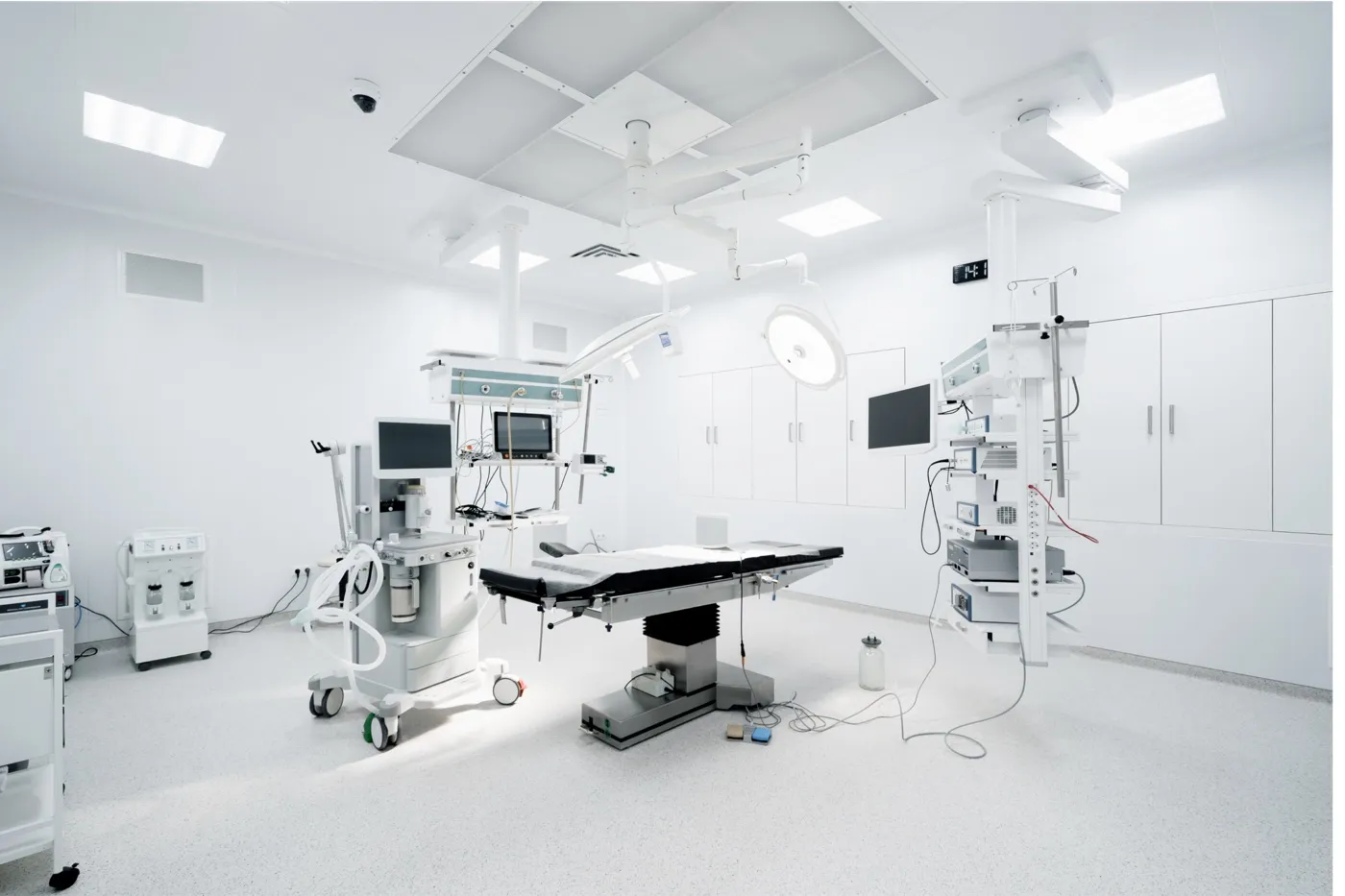
Installation starts in the highest-risk room, usually a single operating theatre or an isolation room. Further rooms are connected later without intervention in the completed part.
For your role
Information for the director, the finance department, nursing management and the hygiene department: documentable benefits of implementation, the scope of investment and the relationship to the hygiene plan.

Benefits
−95%
airborne microbial load
Lower airborne load in the rooms where patients are most vulnerable. The staff who work there for an entire shift share the same environment.
20 min
room preparation
No moving of equipment, no covering of surfaces and no waiting for ventilation. The cycle is started by a single member of staff.
Record
of every cycle
From the Professional level, every cycle has a record with the time, room and operator identification. It is created without any action by staff.
Capacity
In practice, room disinfection is often carried out whenever operations allow. A permanently installed system turns it into a scheduled item with a fixed duration.
01
20 minutes from start until the room can be used. The duration is set during design for the given room and is the same every time it runs, so it can be factored into the operating theatre schedule.

02
The cycle needs no supervision. Staff carry on with their work while it runs.
03
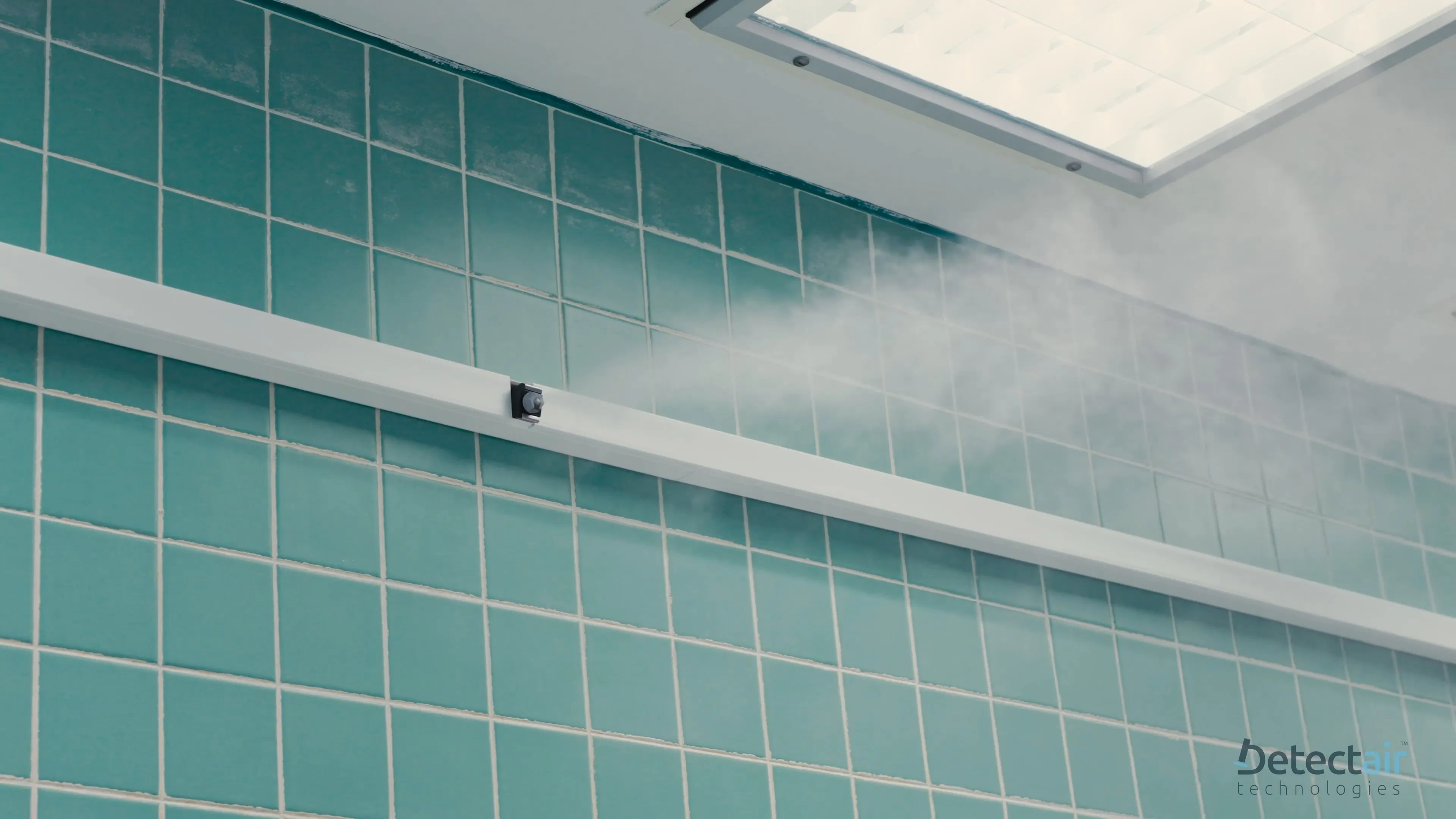
Equipment stays in place and in operation. The most time-consuming part of preparation is no longer needed.
Documentation
An inspection assesses not only whether a hygiene plan exists, but also how compliance with it is documented.
01
An automatic record of every cycle means the evidence is created without any action by staff and does not depend on how much time they have.
02
When asked which cycles ran in a specific room on a specific day, the answer is available in the system history. At the Enterprise level, the archive is kept with no time limit.
Evidence
Clinically demonstrated efficacy
Efficacy was measured on a ward of a Slovak university hospital over six months. The results were peer reviewed and published in the scientific journal Antibiotics.
Demonstrated results: A reduction in airborne microbial load of 95% with daily application and of 71.3% with application twice a week after 180 days, statistically significant (p < 0.001). In the treated rooms, the load on surfaces also fell (p = 0.010); compared with the control rooms, the difference on surfaces did not reach statistical significance. Measured on an open ward in full operation, not in a laboratory chamber.
Hygiene regime
MEDIfogg® complements existing hygiene and infection control measures with an automated step of clinically demonstrated efficacy. The hygiene plan remains in force; manual disinfection and existing protocols remain unchanged.
Legislation
In the public consultation on the draft decree of the Ministry of Health of the Slovak Republic on minimum requirements for the material and technical equipment of inpatient healthcare facilities (LP/2026/442), seven bodies proposed that the germicidal (UV) lamp should not be the only permissible technology for disinfecting air and surfaces. These are comments on a draft; the decree in this wording is not yet in force.
| Institution | Type of comment | What it proposed |
|---|---|---|
| Association of Hospitals of Slovakia (ANS) | ordinary | In addition to germicidal lamps, allow other technologies for the decontamination of air and surfaces (it cited ozone generators as an example); it rejected technological exclusivity. |
| Federation of Employers' Associations of the Slovak Republic (AZZZ SR) | fundamental | Permit other, more effective technologies instead of the exclusive use of germicidal lamps; do not hinder new technologies. |
| Confederation of Trade Unions of the Slovak Republic (KOZ SR) | fundamental | Throughout the text, add device-based decontamination by aerosol fogging with whole-room coverage alongside the germicidal lamp. |
| Public Health Authority of the Slovak Republic (ÚVZ SR) | ordinary | Replace the term “germicidal lamp” with the wording “germicidal lamp or other alternative technology for the disinfection of air and surfaces” and align the provisions with the decree on outpatient care. |
| National Institute of Children's Diseases (NÚDCH) | ordinary | It supported device-based decontamination by aerosol fogging with whole-room coverage; it highlighted dry fog, the short application time, effectiveness both in the air and on surfaces, and material compatibility. |
| Health Care Surveillance Authority (ÚDZS) | fundamental | It supported whole-room aerosol disinfection with dry fog and a technology-neutral solution. |
| State Institute for Drug Control (ŠÚKL) | ordinary | Add the option of using another device with the same purpose and the same or greater effect; it pointed out the limited effectiveness of germicidal lamps in practice and the impact of radiation on equipment. |
Investment
The system is installed room by room and department by department. The decision therefore concerns a specific department, not the budget for the whole building.
01
Installation starts in the highest-risk room, usually a single operating theatre or an isolation room. Further rooms are connected later without intervention in the completed part.
02
The price is made up of the central unit, the number of sections and the number of nozzles. One central unit serves an entire operating suite or department, and each theatre or room is a separate section with its own nozzles. Adding another theatre therefore does not mean a new investment in the whole system, only the addition of a section.
03
The system can be purchased or leased; for larger projects we can also arrange financing through partners. We discuss how it is classified (medical technology or construction investment) and the procurement procedure with your finance department.

Sales Director and Project Manager, Detectair Technologies
What interests you most about MEDIfogg®?
Choose the topics that matter most to you and we will get back to you with exactly what you are interested in.