

For your facility

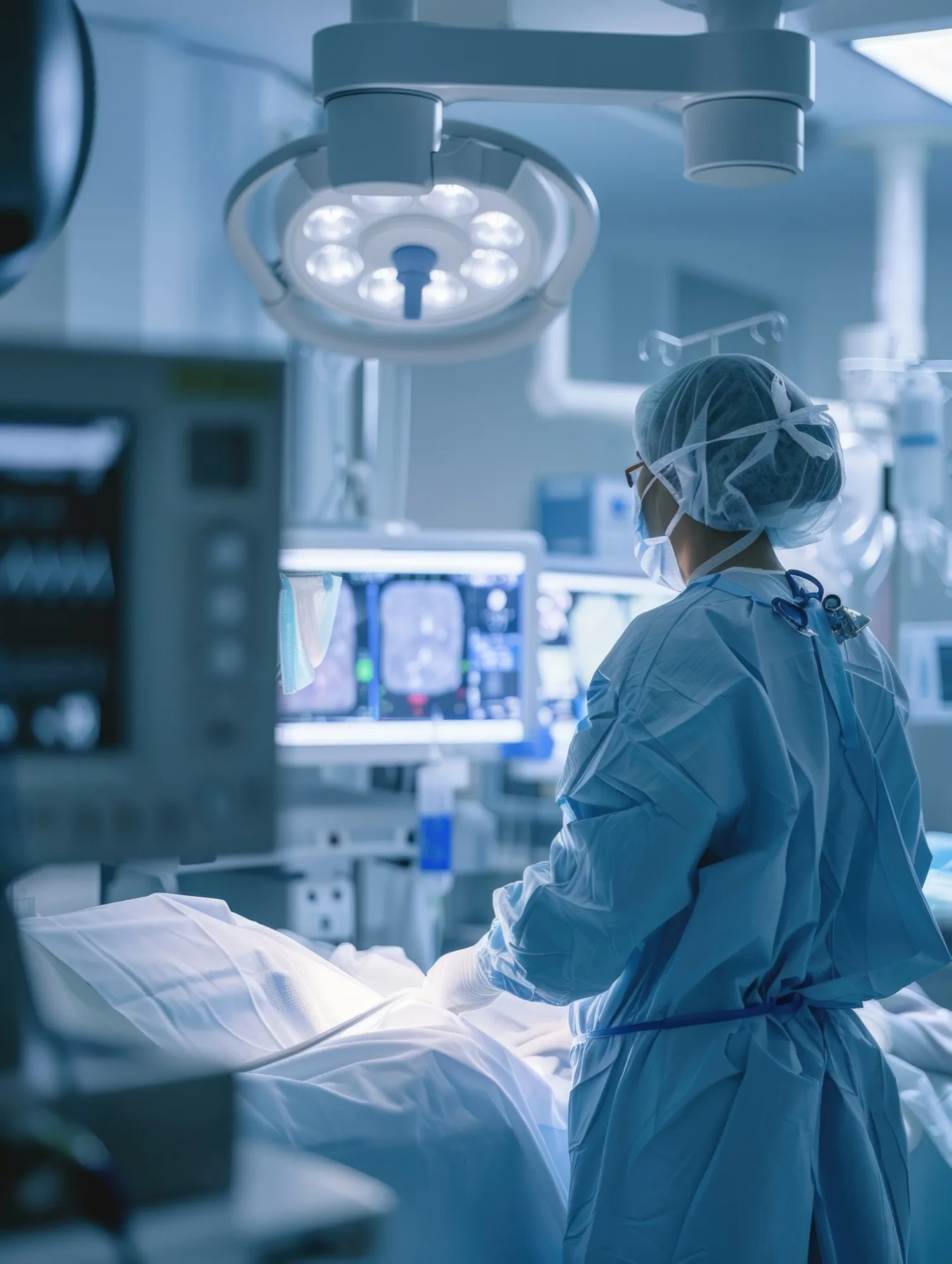
Operating theatres, ICUs, isolation rooms and pathology

Lower microbial load in the areas where patients are most vulnerable. Rooms prepared in a time you can plan into the operating schedule. And the same environment for the staff who work there for the whole shift.

Hospital ward

What it delivers

Three documentable changes in operation

Each of them is backed by a measurement or an operating record.

01

Lower microbial load in critical areas

The measurement took place on an open ward in full operation: with daily application, the airborne microbial load fell by 95% after 180 days. Critical areas of a hospital have higher requirements for environmental cleanliness, which is why reducing the load is relevant precisely there.

02

Predictable room preparation

Twenty minutes without supervision is an item you can plan into the operating schedule. Room preparation no longer depends on how much time happens to be left for it or how many people are on shift at the moment.

03

The same environment for staff

Staff are in the same environment every day, for the whole shift. A lower airborne microbial load therefore concerns not only patients but also the people who work there.

Priority areas

Areas with the greatest benefit

The proposed solution is prepared for areas with an identified risk. We recommend starting the installation where patients are most vulnerable or where rooms are used most frequently.

01

Operating theatres

An open surgical wound and a high concentration of equipment that is not moved during manual disinfection. Room preparation has a fixed duration that you can plan into the operating schedule.

02

ICU and intensive care

Patients with weakened immunity, invasive lines and equipment that cannot be switched off or moved. The fog also treats surfaces behind equipment without the need to disconnect it; the bay is treated between patients or after a transfer. According to ECDC, the prevalence of hospital-acquired infections is highest in intensive care units: 20.5% compared with 6.4% in other specialties.

03

Isolation rooms

A room that is treated after one patient before the next one arrives. Every cycle is recorded, so treatment of the room is documentable.

04

Procedure rooms and sterilisation

High frequency of use and short intervals between procedures. A twenty-minute cycle without supervision fits into such a schedule more easily than a method that requires staff.

05

Pathology and autopsy rooms

One of the typical uses of the system. Rooms with a high microbial load and with exposure of the staff who work there daily, where the frequency of this work cannot be reduced.

Request a meeting

Getting started

The system is installed department by department

Each department is a separate project. The decision therefore concerns specific rooms, not the whole building.

01

Choosing the department and rooms

Usually operating theatres, the ICU or isolation rooms. During the site survey we assess the layout and determine the number of sections and the placement of the nozzles for the department.

From one section

02

Your own measurement of the result

We recommend asking the hospital hygiene department for a baseline and a follow-up measurement of the microbial load. This gives the facility data from its own environment.

The facility's own data

03

Adding another department

It is connected without any intervention in the part already installed. For a larger number of rooms, cascade coverage of multiple rooms is available at Enterprise level.

No intervention in the completed part

Schedule a site survey

Which level

Recommended system level

Disinfection performance is the same at all four levels. Hospital operation, however, needs two specific functions: an archived cycle history and connection to the building management system.

  • Professional

    Professional: archiving of operating data

    Archiving of operating data, extended RFID authentication, predictive maintenance and remote service via VPN. From this level upwards, every cycle is documentable during inspections.

  • Enterprise

    Enterprise: integration into building systems

    Integration into the building management system, user account management, alarm history, unlimited archive and cascade coverage of multiple rooms. The recommended level for university and teaching hospitals.

Evidence from the same environment

Measurement in a hospital environment

Effectiveness was verified by University Hospital Bratislava, Ružinov, together with the Faculty of Medicine of Comenius University on an open ward in full operation. The measurement lasted six months and took place on four dates; the results were published in a peer-reviewed journal.

  • −95%

    with daily application

    546 → 27 colonies in the air after 180 days

  • p < 0.001

    statistically significant

    no change in the control rooms

  • 5

    further facilities

    measurements from AGEL, UNB Dérer, University Hospital Nitra, Antolská and ODCH Kramáre, on request after signing an NDA

Materials by role

Materials for each role

Several departments are involved in deciding to introduce the system in a hospital. Each of them has its own page with the relevant materials.

03

Management and hygiene

Capacity, documentability during inspections, relation to the hygiene plan, investment.

Call us or fill in the form

Contact form

What interests you most about MEDIfogg®?
Choose the topics that matter most to you and we will get back to you with exactly what you are interested in.

This field is required.
Please enter a valid email address.

No obligation.
By submitting, you consent to the processing of your data for the purpose of being contacted.

Contact form

What interests you most about MEDIfogg®?
Choose the topics that matter most to you and we will get back to you with exactly what you are interested in.

This field is required.
Please enter a valid email address.

No obligation.
By submitting, you consent to the processing of your data for the purpose of being contacted.

Write to usI'm interested